Japan’s long-term strategy to achieve resource independence has reached a historic milestone through a groundbreaking deep-sea mission.
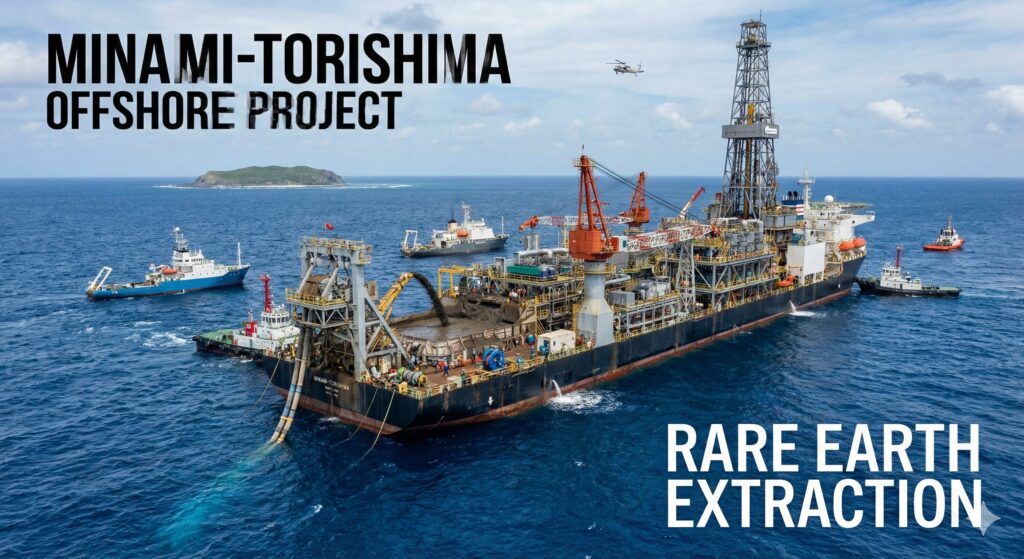
Researchers and government agencies successfully retrieved rare-earth-rich mud from the seabed at a depth of 6,000 meters in the waters surrounding Minamitorishima Island.
This achievement marks the world’s first successful extraction of mineral resources from such extreme depths, demonstrating a significant leap in maritime engineering.
The seabed within Japan’s Exclusive Economic Zone (EEZ) near Minamitorishima is estimated to contain over 16 million tons of rare earth elements. This vast reserve is equivalent to hundreds of years of domestic consumption.
Specifically, the deposits are rich in dysprosium, essential for high-strength magnets used in electric vehicles, and yttrium, a key component in laser technology.
The successful recovery from 6,000 meters—nearly twice the height of Mount Fuji—proves that tapping into these remote resources is technically feasible.
Beyond the sheer volume of the resources, the quality of the Minamitorishima deposits offers a distinct competitive advantage.
Unlike many land-based rare earth mines, the deep-sea mud in this region contains extremely low levels of radioactive elements such as thorium and uranium. In traditional mining, the presence of these elements necessitates complex and costly disposal processes to mitigate environmental risks.
The “clean” nature of Japan’s underwater mud simplifies the refining process, potentially lowering the environmental impact and reducing overall processing costs.
While technical hurdles remain regarding large-scale commercialization, this breakthrough positions Japan to fundamentally reshape its supply chain.
By establishing a domestic source for these critical minerals, the nation aims to reduce its heavy reliance on external suppliers and ensure economic security for its high-tech industries.
Government officials and experts view this achievement not just as a technical triumph, but as a cornerstone for a resilient and sustainable resource future.
Japan’s l___-t___ s_______ t_ a______ r_______ i___________ h__ r______ a h_______ m_________ t______ a g___________ d___-s__ m______.
R_________ a__ g_________ a_______ s___________ r________ r___-e____-r___ m__ f___ t__ s_____ a_ a d____ o_ 6,000 m_____ i_ t__ w_____ s__________ Minamitorishima Island.
T___ a__________ m____ t__ w____’_ f____ s_________ e_________ o_ m______ r________ f___ s___ e______ d_____, d____________ a s__________ l___ i_ m_______ e__________.
T__ s_____ w_____ Japan’s Exclusive Economic Zone (EEZ) n___ Minamitorishima i_ e________ t_ c______ o___ 16 m______ t___ o_ r___ e____ e_______.
T___ v___ r______ i_ e_________ t_ h_______ o_ y____ o_ d_______ c__________.
S___________, t__ d_______ a__ r___ i_ d_________, e________ f__ h___-s_______ m______ u___ i_ e_______ v_______, a__ y______, a k__ c________ i_ l____ t_________.
T__ s_________ r_______ f___ 6,000 m_____—n_____ t____ t__ h_____ o_ Mount Fuji—p_____ t___ t______ i___ t____ r_____ r________ i_ t_________ f_______.
B_____ t__ s____ v_____ o_ t__ r________, t__ q______ o_ t__ Minamitorishima d_______ o_____ a d_______ c__________ a________.
U_____ m___ l___-b____ r___ e____ m____, t__ d___-s__ m__ i_ t___ r_____ c_______ e________ l__ l_____ o_ r__________ e_______ s___ a_ t______ a__ u______.
I_ t__________ m_____, t__ p_______ o_ t____ e_______ n___________ c______ a__ c_____ d_______ p________ t_ m________ e____________ r____.
T__ “c____” n_____ o_ Japan’s u_________ m__ s_________ t__ r_______ p______, p__________ l_______ t__ e____________ i_____ a__ r_______ o______ p_________ c____.
W____ t_________ h______ r_____ r_______ l____-s____ c______________, t___ b__________ p________ Japan t_ f____________ r______ i__ s_____ c____.
B_ e___________ a d_______ s_____ f__ t____ c_______ m_______, t__ n_____ a___ t_ r_____ i__ h____ r_______ o_ e_______ s________ a__ e_____ e_______ s_______ f__ i__ h___-t___ i________.
G_________ o________ a__ e______ v___ t___ a__________ n__ j___ a_ a t_________ t______, b__ a_ a c_________ f__ a r________ a__ s__________ r_______ f_____.
■ Vocaburaly
記事の中で使われている重要な語彙や表現をピックアップしました。ニュース英語でよく使われる表現も含まれています。
・Ambition 大きな目標、野心。
国や組織が成し遂げようとする強い意欲を指します。
・Resource independence 資源の自立、資源自給。
他国からの輸入に頼らず、自前でエネルギーや原材料を確保することです。
・Groundbreaking 画期的な、これまでにない。
新しい分野を切り拓くような発見や成果に使われます。
・Retrieve 回収する、取り出す。
深海や宇宙など、アクセスが困難な場所から何かを持ち帰る際によく使われる動詞です。
・Exclusive Economic Zone (EEZ) 排他的経済水域。
沿岸国が水産資源や鉱物資源の探査・開発などの権利を持つ海域のことです。
・Equivalent to 〜に相当する、〜と同等の。数字や規模を比較して、その大きさを分かりやすく説明する際に便利です。
・Domestic consumption 国内消費。
その国の中で使われる資源や製品の量のことです。
・Feasible 実行可能な、実現できる。
計画や技術が、実際に機能するかどうかを議論する際のキーワードです。
・Competitive advantage 競争優位性。
他者と比較して、より有利な条件や強みを持っている状態を指します。
・Radioactive elements 放射性元素。
記事内ではトリウムやウランなど、環境負荷や処理コストに関わる要素として登場します。
・Mitigate 軽減する、和らげる。
リスクや悪影響、痛みなどを小さくするという文脈で使われるフォーマルな語です。
・Refining process 精錬工程。
採取した原料から不純物を取り除き、純度の高い物質にするプロセスです。
・Commercialization 商業化、事業化。
研究段階の技術を、実際のビジネスとして成立させることを指します。
・Supply chain サプライチェーン、供給網。
原材料の調達から製造、配送までの一連の流れのことです。
Cornerstone 礎石(そせき)、土台。
ある計画や信念の基礎となる、最も重要な要素を意味します。
■ 和訳
日本がレアアース大国へ:深海での画期的な成果
日本の資源自立に向けた長期戦略は、画期的な深海ミッションを通じて歴史的な節目を迎えました。研究機関と政府機関は、南鳥島周辺海域の水深6,000メートルの海底から、レアアースを含む泥の回収に成功しました。この成果は、これほどの極限の深さから鉱物資源を採取した世界初の成功例であり、海洋工学における大きな飛躍を示しています。
南鳥島近海に位置する日本の排他的経済水域(EEZ)内の海底には、1,600万トンを超えるレアアースが存在すると推定されています。この膨大な埋蔵量は、国内消費の数百年分に相当します。具体的には、電気自動車(EV)に使われる高強度磁石に不可欠なジスプロシウムや、レーザー技術の主要成分であるイットリウムが豊富に含まれています。富士山の高さの約2倍に相当する6,000メートルからの回収成功は、これら離れた場所にある資源の活用が技術的に可能であることを証明しました。
資源の量だけでなく、南鳥島の堆積物の質も大きな競争優位性をもたらします。多くの陸上レアアース鉱山とは異なり、この海域のレアアース泥はトリウムやウランといった放射性元素の含有量が極めて少ないのが特徴です。従来の採掘では、これらの元素が含まれることで、環境リスクを軽減するための複雑でコストのかかる廃棄処理が必要となります。日本の海底泥が持つこの「クリーン」な性質は、精錬工程を簡略化し、環境負荷の低減と総合的な処理コストの抑制につながる可能性があります。
大規模な商業化には依然として技術的なハードルが残っているものの、今回の突破口は、日本のサプライチェーンを根本的に再構築する足がかりとなります。これらの重要鉱物の国内供給源を確立することで、日本は外部供給元への過度な依存を減らし、ハイテク産業の経済安全保障を確保することを目指しています。政府関係者や専門家は、この成果を単なる技術的勝利ではなく、強靭で持続可能な資源の未来に向けた礎石と捉えています。
ECOMでは、毎週これらの記事を、ディスカッション教材として使え、先生が音読の発音チェックもしてくれます。
興味がある方は体験レッスンをご活用ください。