
Understanding Yellow Dust: More Than Just Simple Sand
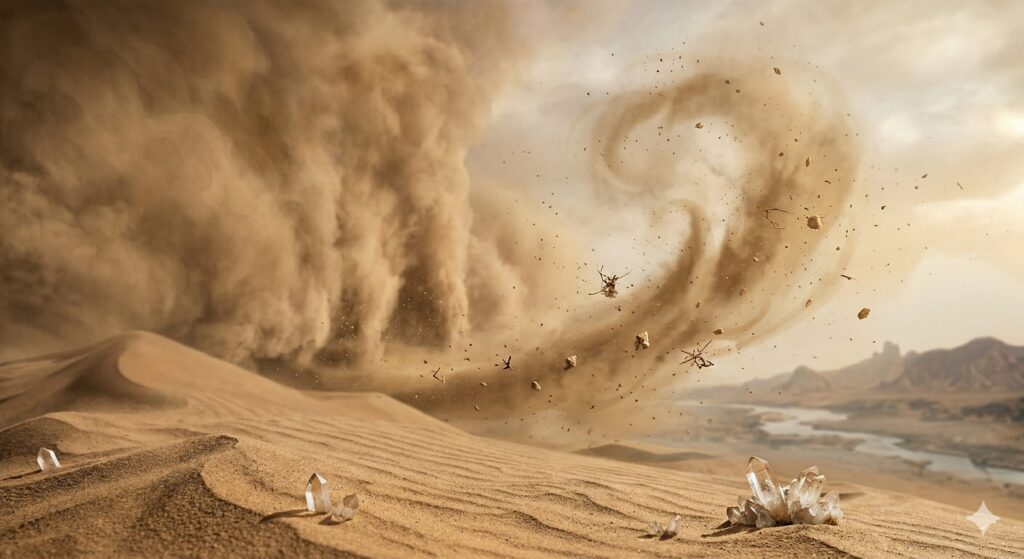
Understanding Yellow Dust: More Than Just Simple Sand
Every year, people in East Asia look at the hazy sky and talk about “Yellow Dust” (also known as Kosa). To many, it just looks like a yellow mist or common dirt. However, scientists have found that these particles are much more complex and have a significant impact on our environment and health.
The Long Journey Across the Sky
Yellow Dust begins in the dry desert regions of Central Asia, such as the Gobi Desert. When strong winds blow over these areas, they lift huge amounts of sand and soil into the air. These particles then travel thousands of kilometers by riding the Westerly winds. These are powerful, high-altitude air currents that move from west to east, carrying the dust over China, Korea, and Japan.
Tiny but Hard Minerals
One of the most important things to know is that Yellow Dust is not just soft “dust.” It is mainly made of tiny mineral particles, including quartz, feldspar, and mica. While these particles are very small, they are actually very hard. You can think of them as microscopic pieces of stone or glass. Because they are so hard and sharp, they can scratch surfaces like car paint, damage industrial machinery, and irritate the sensitive linings of our throats and lungs.
The Connection with Pollution and PM2.5
Yellow Dust becomes even more dangerous because of its journey. As the dust clouds pass over large cities and industrial areas, they act like a sponge. They pick up harmful chemicals and pollutants from factories and cars. This means the dust often carries PM2.5—extremely small particles that are dangerous because they can travel deep into the human body.
Protecting Our Health
Because Yellow Dust is a mixture of hard minerals and industrial pollution, it can cause various health problems. It often leads to itchy eyes, skin irritation, and breathing difficulties. To stay safe, experts recommend checking air quality reports and wearing masks when the dust levels are high. Understanding that Yellow Dust is a complex geological and environmental event helps us better prepare for its arrival every year.
E____ y___, p_____ i_ East Asia l___ a_ t__ h___ s__ a__ t___ a____ “Yellow Dust” (a___ k____ a_ Kosa). T_ m___, i_ j___ l____ l___ a y_____ m___ o_ c_____ d___. H______, s_________ h___ f____ t___ t____ p________ a__ m___ m___ c______ a__ h___ a s__________ i_____ o_ o__ e__________ a__ h_____.
T__ L___ J______ A_____ t__ S__
Yellow Dust b_____ i_ t__ d__ d_____ r______ o_ Central Asia, s___ a_ t__ Gobi Desert. W___ s_____ w____ b___ o___ t____ a____, t___ l___ h___ a______ o_ s___ a__ s___ i___ t__ a__. T____ p________ t___ t_____ t________ o_ k_________ b_ r_____ t__ Westerly w____. T____ a__ p_______, h___-a_______ a__ c_______ t___ m___ f___ w___ t_ e___, c_______ t__ d___ o___ China, Korea, a__ Japan.
T___ b__ H___ M_______
O__ o_ t__ m___ i________ t_____ t_ k___ i_ t___ Yellow Dust i_ n__ j___ s___ “d___.” I_ i_ m_____ m___ o_ t___ m______ p________, i________ q_____, f_______, a__ m___. W____ t____ p________ a__ v___ s____, t___ a__ a_______ v___ h___. Y__ c__ t____ o_ t___ a_ m__________ p_____ o_ s____ o_ g____. B______ t___ a__ s_ h___ a__ s____, t___ c__ s______ s_______ l___ c__ p____, d_____ i_________ m________, a__ i_______ t__ s________ l______ o_ o__ t______ a__ l____.
T__ C_________ w___ P________ a__ PM2.5
Yellow Dust b______ e___ m___ d________ b______ o_ i__ j______. A_ t__ d___ c_____ p___ o___ l____ c_____ a__ i_________ a____, t___ a__ l___ a s_____. T___ p___ u_ h______ c________ a__ p_________ f___ f________ a__ c___. T___ m____ t__ d___ o____ c______ PM2.5—e________ s____ p________ t___ a__ d________ b______ t___ c__ t_____ d___ i___ t__ h____ b___.
P_________ O__ H_____
B______ Yellow Dust i_ a m______ o_ h___ m_______ a__ i_________ p________, i_ c__ c____ v______ h_____ p_______. I_ o____ l____ t_ i____ e___, s___ i_________, a__ b________ d___________. T_ s___ s___, e______ r________ c_______ a__ q______ r______ a__ w______ m____ w___ t__ d___ l_____ a__ h___. U____________ t___ Yellow Dust i_ a c______ g_________ a__ e____________ e____ h____ u_ b_____ p______ f__ i__ a______ e____ y___.
■ Vocaburaly
- hazy かすんだ、もやのかかった。視界がぼんやりしている状態を指し、気象ニュースでよく使われる形容詞です。
- significant impact 重大な影響、かなりの効果。単なる変化ではなく、無視できないほどの大きな影響があることを強調します。
- lift (風などが)巻き上げる、持ち上げる。この記事では、強い風が砂や土を空高くへ運び去る動きを表現しています。
- Westerly winds 偏西風。中緯度地域の上空を西から東へと一年中吹いている強い風のことです。
- high-altitude 高高度の、上空高い場所の。地上に近い場所ではなく、飛行機が飛ぶような高い空の層を指します。
- quartz, feldspar, and mica 石英(せきえい)、長石(ちょうせき)、雲母(うんも)。黄砂の主成分となる硬い鉱物の名前です。
- microscopic 顕微鏡でしか見えないほどの、極めて微細な。目に見えないほど小さな粒子であることを強調する単語です。
- scratch surfaces 表面をひっかいて傷つける。黄砂が硬い粒子であるため、車の塗装やレンズなどを傷つける性質を指します。
- irritate (喉や肌、目などを)刺激する、炎症を起こさせる。アレルギーや体調不良の原因となる文脈でよく使われます。
- act like a sponge スポンジのような役割を果たす。汚染物質を吸い寄せたり、吸着したりする性質を比喩的に表現しています。
- pollutants 汚染物質。工場や車から出る、環境や健康に有害な物質を指す専門的な名詞です。
- breathing difficulties 呼吸困難、息苦しさ。喘息などの症状や、空気が汚れていることによる身体的な不調を指すフレーズです。
■ 和訳
黄砂を理解する:それは単なる砂ではない
毎年、東アジアの人々は霞んだ空を見上げ、「黄砂」について話をします。多くの人にとって、それはただの黄色い霧や、ありふれた泥汚れのように見えるかもしれません。しかし科学者たちは、これらの粒子がもっと複雑なものであり、私たちの環境や健康に大きな影響を与えていることを発見しました。
空を越える長い旅
黄砂は、ゴビ砂漠などの中央アジアの乾燥した砂漠地帯から始まります。これらの地域に強い風が吹くと、大量の砂や土が空中に巻き上げられます。その後、これらの粒子は偏西風に乗って数千キロメートルを移動します。偏西風とは、西から東へと流れる強力な上層気流のことで、中国、韓国、そして日本へと砂を運びます。
小さくても硬い鉱物
知っておくべき最も重要なことの一つは、黄砂は単なる柔らかい「ホコリ」ではないということです。その主成分は、**石英(せきえい)、長石(ちょうせき)、雲母(うんも)**といった微細な鉱物粒子です。これらの粒子は非常に小さいですが、実はとても硬いのです。顕微鏡レベルの小さな石やガラスの破片だと考えてみてください。非常に硬く鋭いため、車の塗装面を傷つけたり、工場の機械にダメージを与えたり、私たちの喉や肺の繊細な粘膜を刺激したりすることがあります。
汚染物質とPM2.5との関係
黄砂は、その旅の途中でさらに危険なものになります。塵の雲が大きな都市や工業地帯の上を通過するとき、それらはスポンジのような役割を果たします。工場や車から出る有害な化学物質や汚染物質を吸着するのです。つまり、黄砂はしばしばPM2.5(体内の奥深くまで入り込む非常に小さな粒子)を運んでくることになります。
健康を守るために
黄砂は硬い鉱物と産業汚染物質が混ざり合ったものであるため、さまざまな健康問題を引き起こす可能性があります。目のかゆみ、肌の荒れ、呼吸のしにくさなどにつながることがよくあります。安全に過ごすために、専門家は空気質の情報をチェックし、濃度が高いときにはマスクを着用することを勧めています。黄砂が複雑な地質学的・環境的な現象であることを理解することは、毎年の飛来に備える助けとなります。
ECOMでは、毎週これらの記事を、ディスカッション教材として使え、先生が音読の発音チェックもしてくれます。
興味がある方は体験レッスンをご活用ください。
